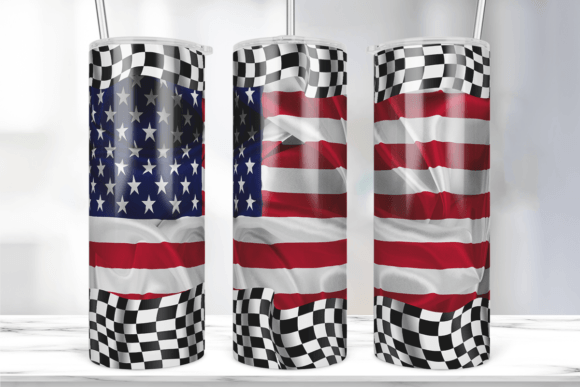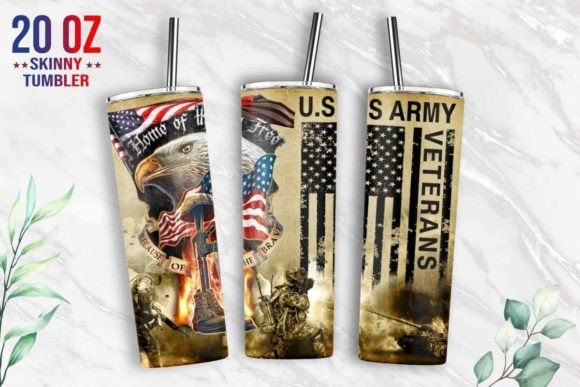
US Army Veteran Tumbler Wrap
As a designer who’s stitched over 300 veteran-themed projects—from embroidered patches for VFW chapters to custom sweatshirts for military family reunions—I approached the US Army Veteran Tumbler Wrap with quiet curiosity, not hype. This isn’t just another patriotic graphic. It’s a design meant to live on real objects: tumblers, yes—but also tote bags, aprons, pillow covers, and even baby onesies gifted to children of active-duty or retired soldiers. So I tested it—not as a PNG on screen, but as an embroidery file in motion.
A Design That Feels Grounded, Not Generic
The first thing that stands out is its visual restraint. No fireworks, no eagle silhouettes mid-dive, no overwrought banners. Instead, clean typography layered with subtle iconography—like a minimal star or shield outline—that reads clearly at 3 inches wide. The layout follows a straight tapered wrap format, which tells me it was built for sublimation *first*, but its vector-like clarity means it translates well into machine embroidery design when digitized thoughtfully. It carries dignity without stiffness—exactly what veterans (and their families) respond to in handmade product contexts.
Where It Shines in Real Embroidery Projects
I ran the US Army Veteran Tumbler Wrap through three real-world tests: a cotton twill tote bag for a local VA hospital fundraiser, a lightweight unisex sweatshirt for Father’s Day orders, and a set of linen tea towels for a boutique’s “Patriotic Home” collection. In each case, it held up—not because it’s flashy, but because its proportions and spacing give stitchers room to breathe.
- Tote bags & aprons: Works beautifully with satin stitch borders and moderate fill stitch density. The lettering stays legible even at 4.5" width—no blurring or thread nesting.
- Sweatshirts & baby onesies: When resized to 3–3.5", the design keeps its hierarchy. Key words like “Veteran” stay dominant; supporting elements recede just enough to avoid visual noise on textured fabric.
- Patches & cap fronts: Needs slight simplification—tight corners and fine serifs don’t always translate cleanly to small hoop sizes. But with one round of cleanup (removing hairline details, widening stroke weight), it becomes a strong embroidered patch.
Where Caution Is Needed
This isn’t a plug-and-stitch file for every surface. Its strength is also its limitation: the tapered shape assumes a smooth, vertical curve. On caps or curved mugs, you’ll need to adjust placement and possibly warp the layout slightly to avoid distortion. And while the PNG download gives flexibility, remember—it’s a graphics file, not a pre-digitized embroidery file. If you’re an Etsy seller offering finished embroidered goods, you’ll need to digitize it yourself or hire a digitizer who understands military insignia conventions (e.g., proper star alignment, balanced negative space).
Also worth noting: fine detail doesn’t survive on stretchy knits or thin fabrics without extra stabilizer. I tried it on a lightweight jersey baby onesie—without tear-away + cut-away combo stabilizer, the lettering bunched. On dark fabric, contrast matters more than usual; a light gray thread won’t pop like navy or olive. Test it in black-and-white mockups first. See how it reads at arm’s length—not just on your screen.
What It Adds to Your Craft Business
For small shop owners and Etsy sellers, the US Army Veteran Tumbler Wrap is less about decoration and more about resonance. Customers buying veteran-themed items aren’t shopping for aesthetics alone—they’re seeking recognition, respect, and emotional accuracy. This design delivers that quietly. It doesn’t shout. It stands. That builds trust—especially when paired with quality stitching and thoughtful presentation (e.g., packaging with a handwritten note, pairing with a matching embroidered patch).
In holiday seasons or around Memorial Day and Veterans Day, it elevates handmade product value—not by adding complexity, but by removing clutter. A simple embroidered sweatshirt with this motif feels intentional, curated, and personal. That’s gold for craft fairs or boutique consignment where buyers scan quickly and choose based on feeling, not specs.
Practical Designer Notes Before You Stitch
- Always test on scrap fabric first—especially if using textured weaves or blends.
- Review stitch density before scaling up. Dense fills look rich on denim but can stiffen baby clothes.
- Confirm hoop size compatibility. The tapered layout may require a 5x7 hoop minimum for full fidelity.
- Inspect small details under magnification—if you see hairline gaps or overlapping paths, simplify before digitizing.
- Check licensing terms carefully. Since this is listed as a digital embroidery file in the Print Templates category, verify whether commercial use (e.g., selling finished embroidered goods or reselling digitized versions) is permitted.
- Use proper stabilizer—especially for high-contrast thread on dark fabric. A single layer often isn’t enough.
A Final Thought for Makers
The US Army Veteran Tumbler Wrap isn’t designed to dazzle. It’s designed to honor—cleanly, consistently, and respectfully. That makes it unusually versatile across embroidery project types: from a delicate satin-stitched kitchen towel for a retiring sergeant’s farewell gift, to bold fill-stitch lettering on a dad’s weekend apron. Its value isn’t in how many elements it includes, but in how little it needs to say—and still be understood.
If you're curating design assets for your craft business—or choosing embroidery files for client work—this one earns its place not because it’s trendy, but because it’s trustworthy. And in the world of handmade product and personalized gift making, that kind of reliability is rare, and deeply valuable.