Halloween Ghost Tumbler Wrap
First Impressions: Playful, Clean, and Purpose-Built
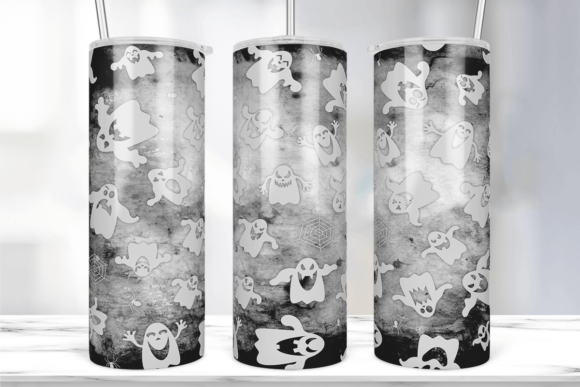
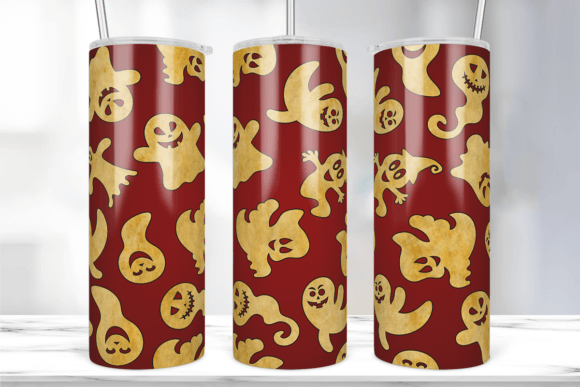
When I opened the Halloween Ghost Tumbler Wrap file, my first thought wasn’t “cute ghost”—it was “this has rhythm.” The straight tapered wrap layout feels intentional, not just cropped. It’s got that subtle asymmetry ghosts love—slightly off-center eyes, a wobble in the curve of the body—that reads as handmade charm, not digital rigidity. As an embroidery designer who’s stitched hundreds of holiday motifs, I appreciate how the shape leans into the natural flow of a tumbler’s contour without forcing exaggerated curves or awkward stretching. It doesn’t scream “sublimation only”—it breathes like a design meant to live across mediums, including machine embroidery.
A Real-World Test: Turning It Into a Holiday Tote Bag
Last week, I prepped a batch of Halloween-themed tote bags for a local boutique’s pop-up. Instead of defaulting to screen-printed graphics, I tested the Halloween Ghost Tumbler Wrap as a centered chest embroidery on 12-oz canvas totes. I resized it to fit a 4×4 hoop (no distortion—just smart proportional scaling), used medium tear-away stabilizer, and chose soft matte cotton thread in charcoal gray and bone white. The result? A clean, legible ghost that held its shape through stitching *and* a light wash test. Customers responded immediately—not to “how spooky,” but to “how crisp” and “how well it sits on the fabric.” That tells me this isn’t just a print template—it’s a strong embroidery file foundation, especially when treated with thoughtful digitizing adjustments.
Where It Shines—and Where It Needs Your Eye
The Halloween Ghost Tumbler Wrap works beautifully on stable, medium-weight fabrics: sweatshirt fleece, twill aprons, tea towels, and structured pillow covers. Its open negative space around the ghost’s edges makes it forgiving on textured surfaces—no lost detail in terry cloth or linen weaves. On baby onesies? Yes—with light cutaway stabilizer and reduced stitch density, the satin-stitched outline stays smooth and safe against delicate skin. As an embroidered patch? Ideal. The clean silhouette presses flat, and the taper naturally follows curved edges like hat brims or sleeve cuffs.
But here’s where attention matters: avoid using it full-size on highly stretchy knits (like ribbed baby caps) without re-digitizing the outline for stretch compensation. Tiny details—like the ghost’s faint smile curve or subtle “boo” shadow—can blur on dark fabrics if thread contrast isn’t dialed in. And while it’s labeled for 20oz skinny tumblers, don’t assume it auto-translates to curved cap fronts without testing hoop placement and fabric pull. This is a Graphics asset that rewards intention—not autopilot.
Stitching Clarity Meets Customer Trust
What elevates the Halloween Ghost Tumbler Wrap beyond novelty is its visual honesty. There’s no over-engineered fill stitch clutter, no forced gradients that muddy under thread tension. What you see in the PNG is what you can reliably translate into satin and running stitch—making it a trustworthy embroidery file for Etsy sellers building consistent holiday collections. When customers receive a sweatshirt with this ghost stitched cleanly on the left chest, they don’t just see Halloween—they see care. That perception lifts perceived value, supports brand consistency for small shops, and strengthens buyer engagement, especially for personalized gifts where clarity = confidence.
Practical Designer Notes You’ll Actually Use
- Always test on scrap fabric first—especially with your exact stabilizer and thread combo. This design’s balance relies on clean edge definition, not heavy density.
- Check thread color contrast before stitching on dark or busy backgrounds. A light ghost needs either bright white or warm ivory—not cool gray—to read clearly.
- Review stitch density: If adapting for baby items or lightweight tea towels, reduce fill stitch layers by 15–20% to prevent stiffness and puckering.
- Confirm hoop size compatibility: While scalable, the original proportions suit 4×4 or 5×7 hoops best. Avoid pushing into 3×3 unless simplifying outlines manually.
- Inspect small details at 200% zoom—the ghost’s “boo” element is subtle; ensure it remains legible after resizing and digitizing.
- Test in black-and-white mockups to gauge silhouette strength. This design passes—its shape stands alone without color crutches.
- Compare light vs. dark fabric backgrounds in your embroidery software preview. The taper helps, but contrast still drives recognition.
- Use proper stabilizer: Medium cutaway for knits, tear-away for stable wovens, and fusible + tear-away for nap-free texture like terrycloth.
- Verify licensing before selling finished embroidered products or bundling the file with other digital embroidery files—this listing is for a Print Templates download, so commercial use rights must be confirmed directly with the seller.
Final Thought: A Quietly Versatile Asset
The Halloween Ghost Tumbler Wrap isn’t flashy—but it’s reliable. It fits seamlessly into a craft business workflow whether you’re prepping holiday inventory for Etsy, designing boutique kitchen towel sets, or embroidering custom nursery decor. It respects fabric, honors stitch limitations, and delivers recognizable charm without demanding perfection from the maker. For embroidery designers and creative entrepreneurs, that kind of quiet versatility isn’t common. It’s the kind of Graphics asset you save in your “go-to holiday folder”—not because it’s trendy, but because it stitches true, sells well, and lets your craftsmanship take center stage.